Food for thought: 50 Educational thinkers

Donald Clark is writing 50 post on 50 learning theorist in 5o days. Very interesting read. It goes from Socrates to Marx, from Jesus and Mohammed to Illich and Pavlov and from Cross to Shank. Food for thought.

His reason for doing this (in his own words): ‘Most physicists know of Newton, Einstein and Hawking. Most artists know of Michelangelo, Rembrandt and Picasso. Most musicians know of Beethoven, Mozart and the Beatles. Businessmen know of Andrew Carnegie, Henry Ford and Bill Gates. Even criminals would know of Guy Fawkes, Jack the Ripper and the Boston Strangler. Yet most learning professionals have at best a sketchy idea of learning theory and the minds that have shaped this theory, and practice.’

Before I started reading I was aware that my theoretical background could be improved. I wasn’t aware of my complete ignorance.The great thing about the post is that he gives an overview of the thoughts and theories but on top of that he analyses them and connects them to current developments.

Here are some of my notes I took while reading:

Socrates was the founder of Adaptive learning. One of his leading principles was: “Questions lie at the heart of learning to draw out what they already know, rather than imposing per-determined views”

Plato with his Academy didn’t only lay the foundation for our universities but also for life long learning.

The thoughts of James form the foundation for modern psychology and education and he has a clear vision on learning: Learning by doing.

Gramsci has a pledge for informal learning. Interesting, I had never heard of him.

Thorndike was one of the first to think about the degree to which learning transfers to actual performance in the real world. Something we need to pay more attention to, After all learning is a mean not a goal.

Bandura was a new one for me, interesting thoughts on emphasis on behavior modeling and self-regulation in learning.

Illich, who offers us a range of alternatives for formalized schooling.

There is a lot more to come. And based on the discussion in the comments section (about theorist he left out), he maybe will do even more than 50. If you haven’t enough after reading his posts you could take a look at the list of David Deubelbeiss, he has some more for you.

Learning scenarios: the future of the learning organizations #lrnwscen

At the online Educa in Berlin Willem Manders and Hans de Zwart facilitated a workshop on the future of learning organizations. They both work For Shell. Shell uses scenarios to investigate the future to assess its current strategy. We applied this method to investigate the future of learning and learning organizations. We started out by brainstorming about general trends, from the outcome we choose two. Then we determined two extremes per trend, with this result:

  1. How work is done?
    Relationship driven vs data driven
  2. How work is organized?
    Structured, regulated and managed vs flexible, individualistic and enabled

If you put these trends on two axes, with the extremes attached to them, you get four quadrants with four possible scenario’s. We brainstormed about their characteristics and came up with four names:

  1. Old boy network
  2. In-crowd
  3. Big data
  4. Quantified self

The image shows the four scenario’s and their characteristic.

The four Learning scenario's

Last week we had a webinar to follow-up and to discuss each scenario. It was an interesting exercise. For starters it was the most complex online setup I ever participated in, with a central part and four separate groups. I was one of the moderators of a sub-group. It was a bit of a technical struggle, but despite of that we had very interesting discussions and outcomes. The results of these sessions will come available at the website learningscenarios.org. A very interesting process and outcomes. You can participate via learningscenarios.org!

What did 100 blog posts bring me?

WordPress pointed out to me that I have published 102 posts in just over 2 years. I decided that this is a good moment to look back and see what it has brought me.

Feedback
When I started my blog in December 2009 I was curious what it would be like to blog and I wanted to improve my English (I’m still working on that). The biggest change is that there are now people who read my posts and who respond to it. My blog now has an average of almost a 100 views per day. That of course is nothing in the greater scheme of things, but it is much more than the average visits that I had in 2010 (7 views per day) and 2011 (37 views per day). The fact that you have an audience makes a big difference, it turns your blog from a diary into a publication and most important: you get feedback. When I started out I just wrote about my learning experiences in my work and at conferences. But that has now shifted. I use my blog to try out ideas. With the responses I can improve my idea or decide to drop the idea.

The first time I used my blog for this purpose was when I became CEO of easygenerator. We were working on our Vision and Mission statement and I decided to publish a first draft of it in my blog. Scary to do on one hand but it paid off. I got a lot of comments on it and some people (like Jay Cross -thanks again!-) took the time for a real in-depth reaction. This enabled me to improve the statement and it gave me a better start at easygenerator.

A highpoint for me was a post on learning metaphors. The post got a thousand views in a matter of days and I got a ton of responses on it. It clearly was a subject of interest to many people. This inspired me to follow up on this with some more posts and I did a well-attended presentation at LSCON in Orlando. As a result the implementation of new learning metaphors has now become the major goal of easygenerator for 2012.

Writing on demand
In 2011 I was asked to contribute to the ASTD’s blog Learning Circuit. A question was posted every month and we (5 ‘thought leaders’) replied on it with a post. The goal was to spark discussion. I found it an interesting experience to write about a given subject and compare my own thoughts with the others. I write posts too for easygenerators company blog. This is quite different. Although we try to keep the blog informal, you have to write mostly about concrete product related things. There is less room for loose ideas and opinions in comparison to this personal blog.

International contacts
I write my blog in WordPress and they recently added ‘Views by country’ to the statistics. It shows that my largest group of readers is from the US and it shows that since February 25 I had people from 98 countries read posts on my blog.

Visits from 98 countries

Visits from 98 countries!

Quit cool! Although the map shows that I have still some work to do in Africa and Asia. Fact is that I gained a lot of international contacts from the blog. This is very helpful in my work.

More feedback
ELearningLearning (an aggregator site on e-Learning related blogs) brings out lists with best e-Learning post of the day/week/month and year. One post I wrote for the Learning Circuit blog made it to the top of that list for 2011. That is a nice form of feedback!

New SCORM standard: I (Actor/Agent) Did (Verb) This (Activity) #TinCanApi

Scorm is finally going to catch up with the current times. This evening I attended a webinar by ADL: the new standard (project TinCan) kickoff. The ADL will launch it in June.

TinCan focuses on capturing activities: I (Actor/Agent) Did (Verb) This (Activity) and the ‘I’, the ‘Did’ and the ‘Activity’ can be almost anything. The ‘I’ can be something like a person, a group, a community. The ‘Did’ for example can be a learning experience, an assessment or a social media activity. The ‘This’ can be any activity that has a learning experience.

Instead of a LMS will will get a LRS; a Learning Record Store. Here you can record all your learning activities. These activities are no longer limited to you. The ‘I’ can also be a group or a community.

This will have a big impact on (e-)Learning. The next step is the adoption of the standard by authoring tools and LMS. This will take some time, so there will not be an effect on the learning activities in the short term. But this effect will be visible in 2013. The most important thing is that it is finally here. This standard will enable next generation e-learning for a lot of people. For more details see  the presentation, it contains links to even more detailed information.

I’m not a standard specialist. Up til now standards represented boundaries for me, boundaries we could not cross. This standard will challenge us, giving us the ability to really create next generation learning experiences in real and virtual live, by individuals or groups, across applications and devices. Maybe a small step for mankind, but a giant leap for e-Learning!

Blackboard buys Moodle partners: open source?

I was planning to write about the fact that this is my 100th post. I was surfing the web to prepare for that post, when I saw a BlackBoard press release and immediately switched subject:

Blackboard acquires Moodlerooms, Netspot

This really is news. Blackboard is one of the largest LMS vendors in the world and is considered state enemy #1 in the Moodle community. Moodlerooms and Netspot are official Moodle partners and will together generate well over 50% of the total partner revenue of Moodle (which is by far their largest source of revenue). This is a takeover with serious impact! Blackboard has taken an interest in open source since a few years, but they where focusing on Sakai (another open source LMS). I visited the Blackboard news page:

Blackboard newspage

screenshot of Blackboards news page

Interesting combination of information on this page. Two news items about the takeover and the following creation of the ‘open source service group’. The third one is Sakai. Sakai is an open source initiative (mainly of US-based universities) and is steered by the Sakai foundation. Blackboard apparently hired Charles Severance, who is one of the Sakai founders and Sakai foundation board members. This gives them serious influence on Sakai (second most important open source LMS after Moodle).

The fourth post is about Angel. Angel was an independent LMS and it was growing rapidly.You could see them as the opposite of giants like Blackboard in many ways, and they where really making an impact in the market, challenging Blackboard. So Blackboard bought them a few years ago. The press release on the Blackboard site of today about Angel announces that support for Angel will not be discontinued yet……

When Blackboard bought Angel the hope was that Angel could influence Blackboard and make them more like Angel was. That it was a sign of change of Blackboard instead of them getting rid of a upcoming competitor in an easy way. I have to say that I wasn’t able to spot any impact from Angel on Blackboard.

This makes you wonder about Blackboards intentions with open source. Are they really embracing it and it this the beginning of something wonderful or will they smother it like they did with Angel.

#LSCON 2012: trends

LSCON 12: Trends

Looking back on the Learning Solution conference and digging through the back-channel, twitter and Map-Deck I tried to discover the latest trends that emerge from these tons of data. I’m afraid it is not a scientific research, but just me reading a lot of information and picking up some signals.

The art of leadership, vision and choosing
A clear trend set by the guild. Three keynotes about three specific arts, all interesting in their own right. For me a confirmation on another trend: There are always great keynotes at LSCON.

Storytelling
This year I noticed a lot of sessions, blogs and tweets about storytelling, gamification and scenario based learning. They all have the story element in common. A great trend as far as I’m concerned. Stories are a great way to involve your learner in the learning process usually it leads to far more attractive and interactive forms of learning. When you start out with a great story, it is hard to and up with a dull PowerPoint like course!

Social learning
Another buzzword at LSCON. I noticed that more and more people are aware of the fact that they do have to address the rise of social media and the impact of it on learning one way or the other. I heard and read a few times that e-Learning could become obsolete if we don’t find a way to use this or at least incorporate this in our learning. The good news is that the new SCORM standard (based on project TinCan) will actually make this possible.

HTML5 – mobile learning
Were mobile was the buzzword at DevLearn, it was replaced by HTML5 at LSCON. There were a lot of sessions about this topic, or mobile publications, because we all want to include flash like elements in our IOS publications. Last year at LSCON people where a bit in disbelieve (flash dead, no way!), this year I didn’t hear anybody about Flash. It seems acceptance of HTML5 is on his way.

Data mining
In the e-Learning world we don’t analyze a lot of data. We report some progress and result information to a LMS that usually has bad reporting facilities, let alone analyzing tools. I can see a new trend that will change that. Imagine information on the usage of your course is available in your authoring tool. You can actually see what content is used, by whom, which question are answered correct and which path people have taken through your learning content. It would be a valuable source for any developer and it would make it possible to improve the learning experience of the learner. I believe this trend is emerging and again project TinCan will play a big role.

Scorm dead?
In previous conferences you could pick up the sound of people who where proclaiming that Scorm is that or at least would die. It is strange indeed to have a standard in this fast developing world with the name Scorm 2004. But again there is project TinCan, it will be the new Scorm standard. And I was really surprised by the pace ADL is moving forward with this. I believe this is the development that will have the biggest impact at the end of the day, supporting almost all trends I have mentioned before.

#LSCON day 3: Scenario based assesments and Choices

I was able to attend two session at the last day of LSCON. The first (concurrent) session was from Iskandaria Masduki about scenario based assessments. Good session with an interesting mix of theory and practical examples. The great advantage of scenario based learning is that you can learn knowledge and skills ‘in context’. One of the practical things I took from this session is that she writes the scenario’s out divided in 5 elements:

  1. The tasks that you need to be able to perform
  2. The procedures you need to know
  3. The tools that you have to use
  4. The knowledge you need to have
  5. The performance you have to deliver

A very helpful scheme to use when you set up a scenario based learning experience. She starts out with a global storyline and character description, than she defines a sequence of events that contain a number of action points. She divides the scenario into smaller parts each containing a few action points. She only scores on action points and on good choice.

The other thing I took away from this session is that she works with just two options at each scenario. This makes it a lot easier to create a scenario and it apparently doesn’t affect the outcome of the learning experience.

These limits in choices brings me to the key-note of the day. The art of choosing by Sheena Iyengar. She is a professor at the Columbia University and does research on choices.

She found that when you have more choices, people are less likely to make a choice. They just can’t decide. She calls this the ‘Choice overload’. The effect is reduced commitment, poorer quality of decisions and less satisfaction with the choice. Interesting stuff to keep in mind when you are creating learning opportunities.

The only way that you can handle a lot of options if you are able to instantly categorize them and delete all non relevant options. But you have to be a true expert to pull that of.

She also gave some practical tips on how to improve choosing. The first was the 3 by 3 rule. You offer people 3 choices, based on their first selecting three next options and again 3 based on their choice.

She also gave 4 techniques:

  1. Cut options. She gave two examples. Sales of a company rose after they reduced the number of brands they had. And when a leader presents his company with two choices instead of more the leadership perception will be substantially higher.
  2. Concretize. Make sure you offer people choices they can relate to, that are clear to them.
  3. Categorize. Organizing the choices in meaningful categories will improve the quality and ability of making a choice.
  4. Condition. When you organize your choices from a high number  to a low number, people will have a higher satisfaction with their choice.

After the session I had a meeting with my colleague Steve. We starting discussing the choices we make as a company and how we could improve on them. It is very special when you walk away from a presentation and are immediately able to apply that information.

There is a lot more to tell about LSCON. I made a whole bunch of notes based on the backchannel and mapdeck. I plan to report on that later. For now (just after a 16 hour trip back home) I will go to work in my garden and think about nothing.

LSCON: day 2 Erik Wahl (wow!), curation and again a lot of people

Today began overwhelming. We entered the Grand ballroom and they announced the keynote of the day: Erik Wahl with a presentation on ‘The art of Vision’. Music started (a beautiful day by U2) a guy jumps on stage and starts painting. After the music stops he has painted a portrait of Bono. This video will give you an idea his of performance.

He also proved to be a great and inspiring presenter. His message is simple. We need creativity and passion to change and innovate. It was a great start of the day, a pleasure to witness and a real energy booster.

The largest part of the day we worked in our booth, talking to people and demonstrating easygenerator. I did another presentation on the ‘Emerging technology stage’. In between I was able to attend a session by Reuben Tozman. That turned out to be interesting. The topic was Curaytion. In his definition you have aggregation (collecting information) and then you have curation which he defines as added a story to a selection of the aggregated information. Like a museum a curator that makes a selection out of a collection of art and present it with a storyline. A great definition and I am with him all the way. But Reuben is a technology believer. He is convinced that the technology will make it possible to completely automate this process. This leads him to the conclusion that we should stop making e-Learning courses and focus on aggregating and curation information. Over time we even don’t need any human involvement anymore. Software and complex algorithms will do this for us.

And here I don’t agree. I believe that the software will improve and will become better in selecting information for us and present it to us in a coherent way. But in my opinion it will be still information or even data. It will not be knowledge and it certainly will not be a learning experience. I believe you will always need a human to moderate that information for you, give meaning to it, sometimes presenting an opinion and create a learning experience based on didactical and instructional design principles.

This was the last day of the expo. That gives me the opportunity to attend more sessions tomorrow. I’m looking forward to it.

#LSCON Day 1: people, new scorm, leadership, Lingos and more people

How do you capture a 19 hour day in a post? That is the challenge of today’s blog. I had installed myself yesterday evening in the pool area of the hotel. Laptop, wireless (sponsored by easygenerator!) and a glass of whiskey. I was just starting to write this post, when two guys (Drew and Marc) joined me. We ended up talking until quit late. That’s one of things I really like about guild conferences. There are so many interesting people working on and thinking about the same stuff as I do. I spoke today to dozens of them. Really inspiring.

Project Tin Can: new scorm standard!
In fact I have to start on the day before the conference. I had a meeting with Aaron Silvers (from ADL) and Tim Martin (from Rustici software) about Project Tin Can. They had exiting news, the work they did on project TinCan will actually become our new Scorm standard and it will in a few months time. It will actually focus on learning experiences. Allowing collaboration on courses, include social media; giving us a language to talk to learning management systems, in short it will lift the limitations that Scorm gives us. This is great news, we have a ton of ideas for ‘next generation learning’ that we couldn’t implement because of scorm limitations. Now we will get a next generation standard. Read all about it at scorm.com!

Keynote by John Maeda about leadership
I liked this keynote, but I was not blown away by it. He didn’t really make the connection with learning. On the leadership topic he had interesting remarks. One was that as a leader you have to get dirty hands (literally). You should have passion, get to the core and be about the why.

I liked his thoughts on how you start out with directional knowledge that makes your identity, then you will get conceptual knowledge (the how) and when you apply this you will get experimental knowledge. But these experiences will change your insights, your concepts and your identity. This means that nothing is written in stone, there is room for doubt and failure. he calls this ‘Fail productively’. These are things that aren’t very often connected to leadership. I believe he is right. Innovation comes from a mix of passion and doubt. If you are not willing to discuss the things you know, there will never be any change. John writes a blog called creative leadership.

People, people people
There are 1300 participant at this conference and I think I spoke to a fair share of them. I did two presentations and was at the booth for a large part of the day. I have to say that the traffic at the expo was a bit less than expected. Last year the expo was next to the ballroom where the general sessions were. This year they moved the general sessions to another building (just across the pool). This makes it less obvious to wander into the expo after a general session.

Kasper presenting at LSCON on learning maps

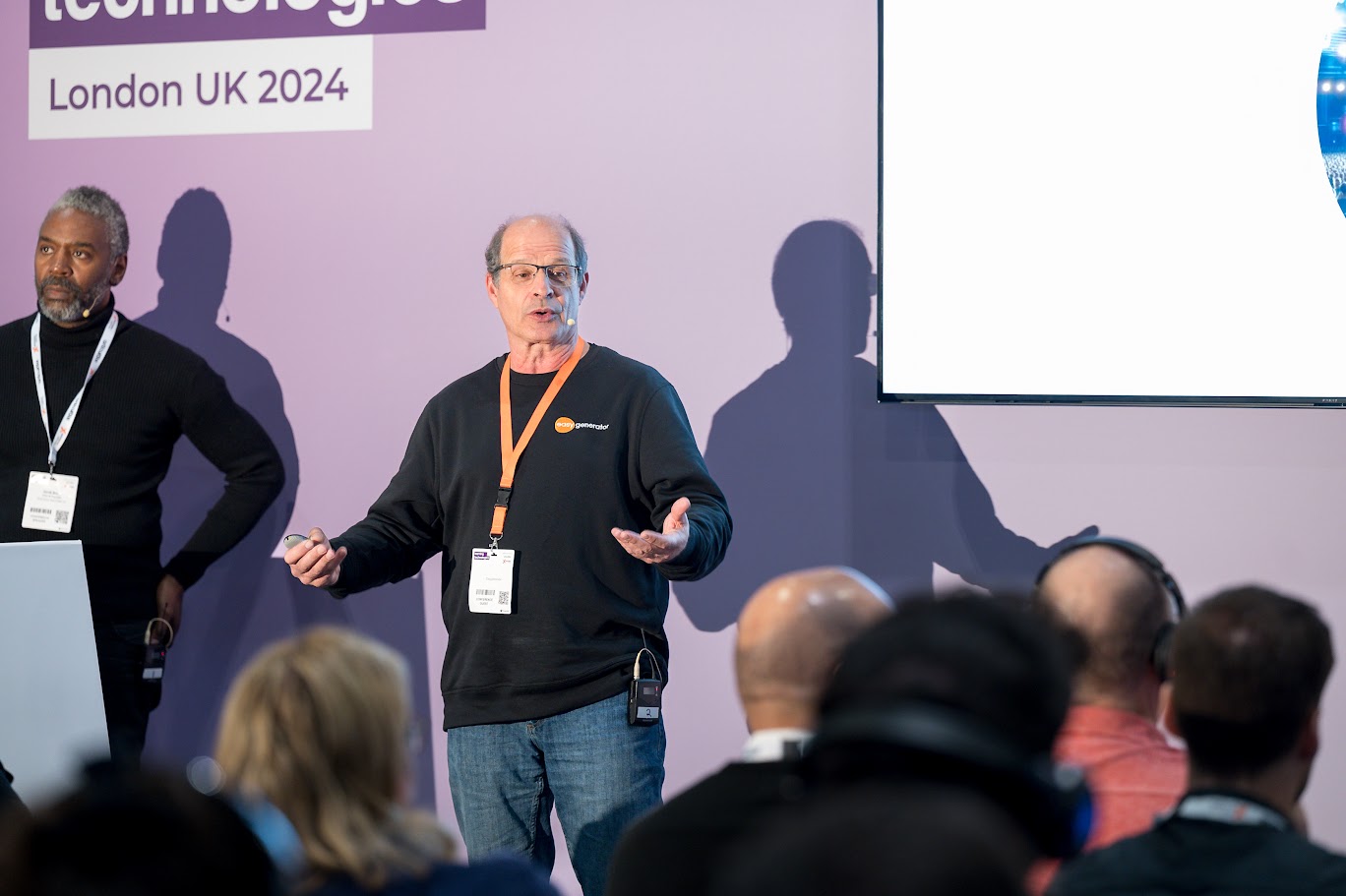
Me presenting

Lingos
I went to a LINGOs dinner in the evening and I really enjoyed it. Again more interesting people (Lingos staff, members from ngo’s, participants in the global give back competition and sponsors). It really is a special organization. Doesn’t  LINGOs ring a bell with you? Please check their website and start participating. Help them to help ngo’s to make this world a better place!

Learning solutions conference day minus one #LSCON12

Tomorrow is the start of the Learning Solution conference, but for me it started today. The Ipad/Iphone app is now available and that is a great way to start the conference. You can easily browse through all the session, see the presentations and add them to your schedule with one click. I love it.

There are a lot of session that I want to attend, I hope that it will be possible, because I have to be at the booth as well. There is another innovation at the LSCON; Map Deck. All presentations are online and Map Deck enables you to pick out slides and put them in your own collection: Either online or in PowerPoint. I took a short glance at it and if it works that is really an added value. At first hand it looks a bit complicated because it is not integrated into the guild website and app. See this link for instructions.

This evening I will join a session for vendors on project TinCan. Project TinCan was a research by Rustici software (sponsored by ADL) into the next generation Scorm. It now looks like this project will be the next Scorm standard. As far as I understood they will enable all kind of social inter-activities. I will find out more this evening and will let you know tomorrow (I plan to write a post each conference day)

And I will meet with my colleagues Steve Harz (from the US) and Sasha Chernenko (from the Ukraine). We don’t meet a lot face to face and I’m really looking forward to sit down with them instead of all the virtual meetings we have all the time. Dan Richards and Ron Wincek from our US partner Interactive Advantage will join us for dinner. All in all a good pre-start of the conference.

I hope to meet a lot of you tomorrow, here is where you can find me: in our booth #409 most of the time. I present from 2.30 to 3.30 on learning maps (International center) and from 4 to 4.45 on The next generation of e-Learning (Grand Ballroom, emerging technology stage). I will join the Lingos dinner in the evening.

Follow

Get every new post delivered to your Inbox.

Join 524 other followers